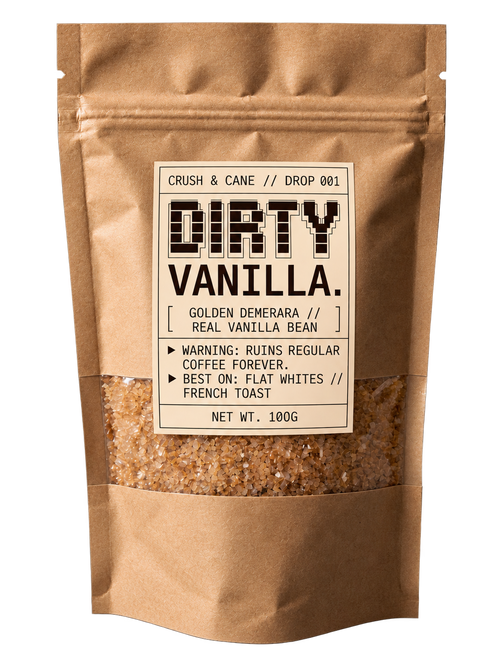
Sugar does not spoil the way fresh food does, but it does not store itself either. Left in the wrong conditions, it hardens, absorbs odours from the cupboard, and loses the texture you actually want when you go to use it.
Does sugar go bad?
Plain granulated sugar has an indefinite shelf life in the sense that it will not grow mould or become unsafe to eat. What changes over time is texture and, for flavoured sugars, aroma. Poor storage causes clumping, and over very long periods, flavoured sugars can lose some of their scent as the natural oils and aromatics fade.
The right way to store sugar
- Use an airtight container. A glass jar with a rubber seal, or a container with a snap-tight lid, keeps humidity out far better than a bag folded over and clipped.
- Keep it cool and dry. Avoid storing sugar near the stove, kettle, or dishwasher, all of which release steam that raises humidity in nearby cupboards.
- Avoid the fridge and freezer. Cold storage introduces condensation when the container is opened and closed, which speeds up clumping rather than preventing it.
- Keep the original pouch inside a container if you like the packaging. The kraft pouches used for flavoured sugar are food safe but not airtight on their own once opened and refolded, so popping the pouch inside a sealed jar gives you the best of both.
How long different sugars actually last
- White and cane sugar: indefinite, if kept dry
- Demerara and muscovado: indefinite, though muscovado can harden faster due to its higher moisture content
- Flavoured sugar: best used within 6 to 12 months for the fullest aroma, though it remains safe well beyond that
Stored properly, a pouch of Midnight Mocha or Juicy Strawberry should stay loose and scoopable long after it is opened. If it does start to clump, a quick fix is usually all it needs rather than a reason to throw it out.