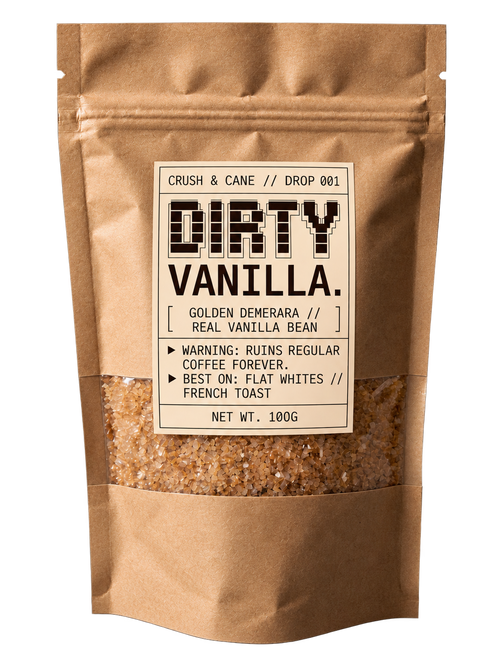
Swapping the type of sugar in a recipe changes more than sweetness. It changes moisture, colour, and how the finished bake holds together. Here is how our three bases behave in the oven.
Demerara sugar
Large, crunchy grains that do not fully dissolve when creamed with butter, which is exactly why bakers use it on top of muffins, scones, and crumbles for a crisp, caramelised finish. Inside a batter it adds a light toffee note without adding much moisture. Dirty Vanilla works well in vanilla cakes, shortbread, and French toast batter, where its caramel and vanilla notes come through clearly.
Muscovado sugar
Higher moisture content than demerara or white sugar, which makes bakes denser and fudgier, closer to the texture you want in a good brownie or a sticky toffee pudding. It also browns faster because of its higher natural sugar and mineral content, so keep an eye on oven time. Midnight Mocha is built for this: cocoa, coffee, and muscovado are a natural match in brownies, chocolate cake, and tiramisu. Spiced Chai shares the muscovado base, so it suits gingerbread, banana bread and sticky puddings, where cinnamon, cardamom, ginger and clove sit naturally.
Cane sugar
Fine, clean, and closest to standard white sugar in how it behaves, which makes it the easiest base to substitute directly into an existing recipe without changing the method. Juicy Strawberry works well in shortbread, sugar cookies, and anything with a fruit filling, where a clean sweetness lets the strawberry lead.
A quick substitution guide
- Replacing brown sugar: muscovado is the closest match
- Replacing turbinado or raw sugar: demerara is the closest match
- Replacing white sugar: cane sugar substitutes directly
Start with whichever flavour fits your bake, or pick up The Full Set to test all four in the same weekend.