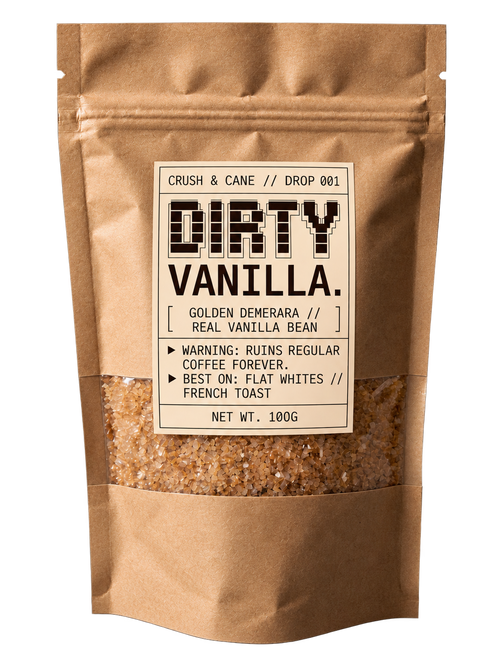
Not all sugar is the same sugar. The base you start with changes the colour, texture, and flavour of everything built on top of it. Here is what separates the three bases we use, and why we picked each one for a specific flavour.
Demerara sugar
A large grain, golden brown, minimally refined cane sugar with a light caramel and toffee note. It keeps some of its natural molasses, which gives it a gentle crunch and warmth. We use it as the base for Dirty Vanilla, since its caramel notes sit naturally alongside bourbon vanilla and hold up well in hot coffee.
Muscovado sugar
An unrefined sugar with a much higher molasses content than demerara, which gives it a dark colour, a soft, almost damp texture, and a deep, almost smoky sweetness. It is the closest thing to raw cane sugar you can buy. We use light muscovado as the base for Midnight Mocha, where its natural richness pairs with cocoa, coffee, and a pinch of sea salt.
Cane sugar
Refined white cane sugar, clean and neutral in flavour with a fine, even grain. Because it does not bring its own flavour to the party, it is the right base when you want the added flavour to lead. That is why it is the base for Juicy Strawberry, letting the real strawberry powder and a touch of malic acid do the talking.
Which one should you use
- Demerara: coffee, lattes, baking that wants a caramel edge
- Muscovado: hot chocolate, espresso drinks, rich bakes like brownies
- Cane sugar: cocktails, iced drinks, anything where a bright, clean flavour matters
Want to compare them side by side? The Full Set gets you one pouch of each.